How To Add Fractions With Variables In The Numerator
How To Add Fractions With Variables In The Numerator. Therefore, n/d = 24/4 = 6. You’ll distribute the exponent to the full fraction if indicated.
Simplify - Add Or Subtract Fractions With Step-By-Step Math Problem Solver from quickmath.com
How to move something from a numerator to a denominator : Suppose you want to add the fractions 3/4 + 7/10. The numerator of a portion is the amount of 4 and also 5 time the denominator.
When Fractions Have The Same Denominator, This Is Called Having A Common Denominator.
The next step is multiplying out the exponents. This will become the second term of your new numerator. Using this module, we can create fractions from integers, floats, decimal and from some other numeric values and strings.
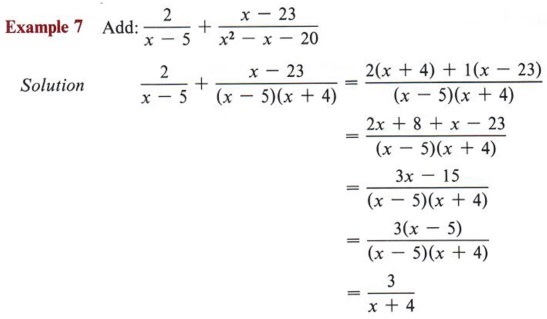
It Is Possible To Add Fractions With Variables.
Let numerator = n and denominator = d. The numerator of a portion is the amount of 4 and also 5 time the denominator. Manipulate the fractions so that they both have the.
How Do You Simplify Fractions With Variables?
To add fractions follow these steps: Remember to flip the sign of each term in the numerator of the. According to the first statement, n = (d x 5) + 4.
Increase The Terms Of Each Fraction So That The Denominator Of Each Equals The Lcm.
There are terms with the denominator 2 in both numerator and denominator. The final answer will be 6 x. You need to create a class that is a wrapper for fractions.
If Needed, Simplify The Rational Expression.
Write out your resulting fraction now: The steps we follow to subtract fractions with variables are as follows: Multiply the denominators of the two fractions.